

Observe
While the new year is still fresh, I took some time to look back. At the European Permaculture Network (EuPN), we track site visits via Matomo. Matomo is a privacy-focuse open-source alternative to Google Analytics. Since we also host the EuPN on our own server, we have access to the raw server log files as well.
Matomo offers many useful insights, such as where visitors come from, how long they stay, and how often they return. But the server logs have one important advantage: they show unfiltered, raw traffic data.
Let’s take 2 January 2026 as an example. Matomo shows 30 visitors for that day. When analysing the server logs, however, we see around 4.300 visits. A large share of this traffic comes from crawlers and bots—roughly half of it. Removing those still leaves around 2.000 visits. From these, we also need to subtract admin activity, which brings the number down to roughly 800 unique visits per day.
That is an enormous difference compared to what Matomo reports. The log files show around 26 times more traffic.
According to Matomo, the EuPN had 12.389 visits in 2025. Based on server-side data, the real number is closer to 300.000 visits. Google Search alone reports a search volume of around 10.000 searches per month in 2025 for relevant terms.
These are the visits tracked by Matomo per country in 2025:
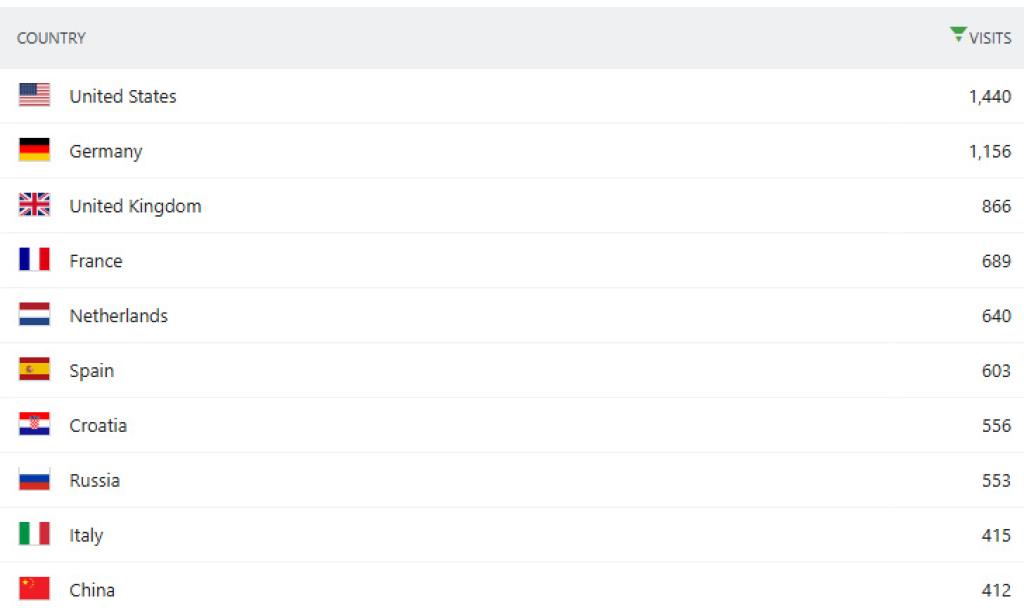
- United States 1.440
- Germany 1.156
- United Kingdom 866
- France 689
- Netherlands 640
- Spain 603
- Croatia 556
- Russia 553
- Italy 415
- China 412
The real numbers are, again, significantly higher.
Interact
Observation without interaction remains passive. In permaculture, observing a system is only the first step; meaningful change happens when we engage with what we see. The same applies here. These numbers tell us that the EuPN platform is being used far more than it might appear at first glance. It is now up to us to use the system:
- If you are a teacher → Get an account and fill in your profile
- If you run a permaculture project, a homestead, a farm → List it in our projects & places listing
- If you run courses → List them in our course listing
- If you have news → Write a blog post
- If you have published a book → Add the book to our book list and write a blog
It is about keeping knowledge, experience, and activity visible and accessible – keeping it outside of closed platforms and proprietary networks.