
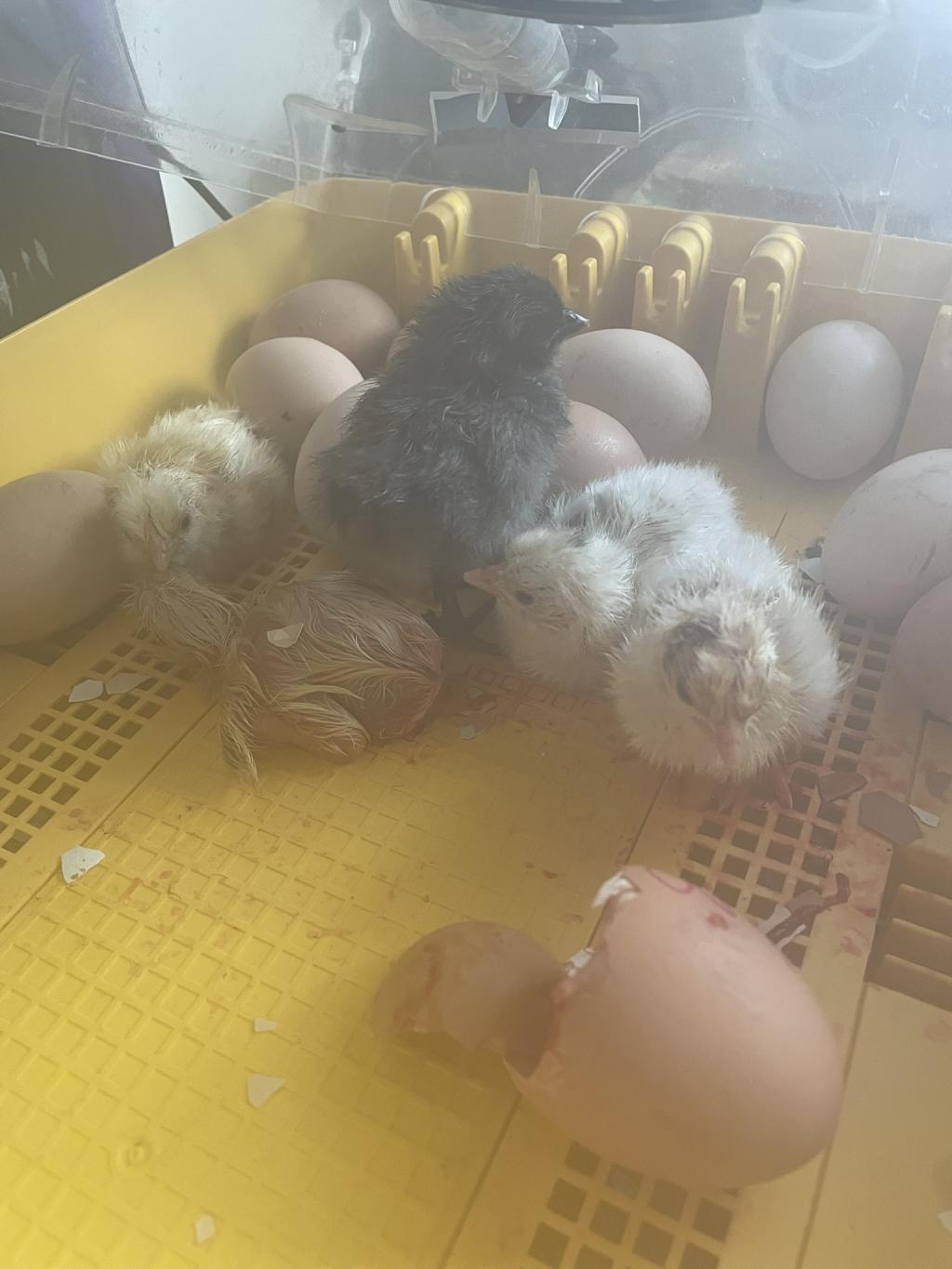
Every spring at Afrinoon, there is a moment of magic that never gets old — the first tiny pip in the shell of an egg that, just days before, you had almost given up on entirely.
This year, we incubated 18 fertilised eggs using our community C15 Association incubator, kindly loaned to us as part of our local network. The eggs came from a friend whose hens had been running with several cockerels, so we had every reason to be confident. And yet, as any smallholder will tell you, hatching is never quite as straightforward as it sounds.
The waiting game — and nearly giving up
Early on, we hit a few hiccups with temperature and humidity regulation — the kind of wobbles that make you hold your breath and hope for the best. By day 22, with no signs of life, I had more or less accepted that this year's hatch was not going to happen. I switched off the incubator and carried it outside.
And then I saw it. One small, determined pip in the side of an egg.
I rushed back inside, plugged the incubator back in, and waited. Within two days, 15 out of 18 eggs had hatched — a wonderful result, and a timely reminder never to give up too soon.
The first days: warmth and rest
Once the chicks hatch, I leave them in the incubator to dry off and find their feet before transferring them to their first home — a cosy box fitted with a chick brooder heating plate where they can snuggle beneath whenever they need warmth.
In previous years, we used heat lamps, and while they do the job, I always felt uneasy about the constant artificial light. Chicks, like all living creatures, need darkness to rest properly. The brooder plate is a great solution — when the light fades naturally, the chicks settle beneath their warm canopy and sleep. It is a small thing, but I believe it makes a real difference to their wellbeing and they are much calmer
Growing Fast: From box to outdoor pen
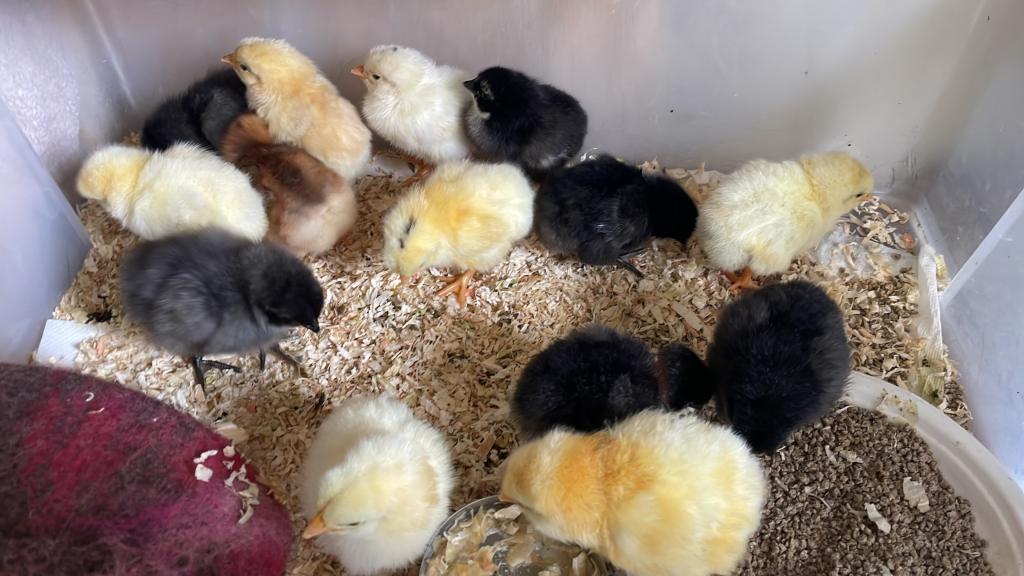
After a week under the Brooder Plate, the chicks moved into a large storage box lined with natural wood shavings. With regular top-ups of food and water throughout the day, they were happy and thriving — but chicks grow at an incredible rate, and within a fortnight it was clear they needed more space.
This is where Glen came in.
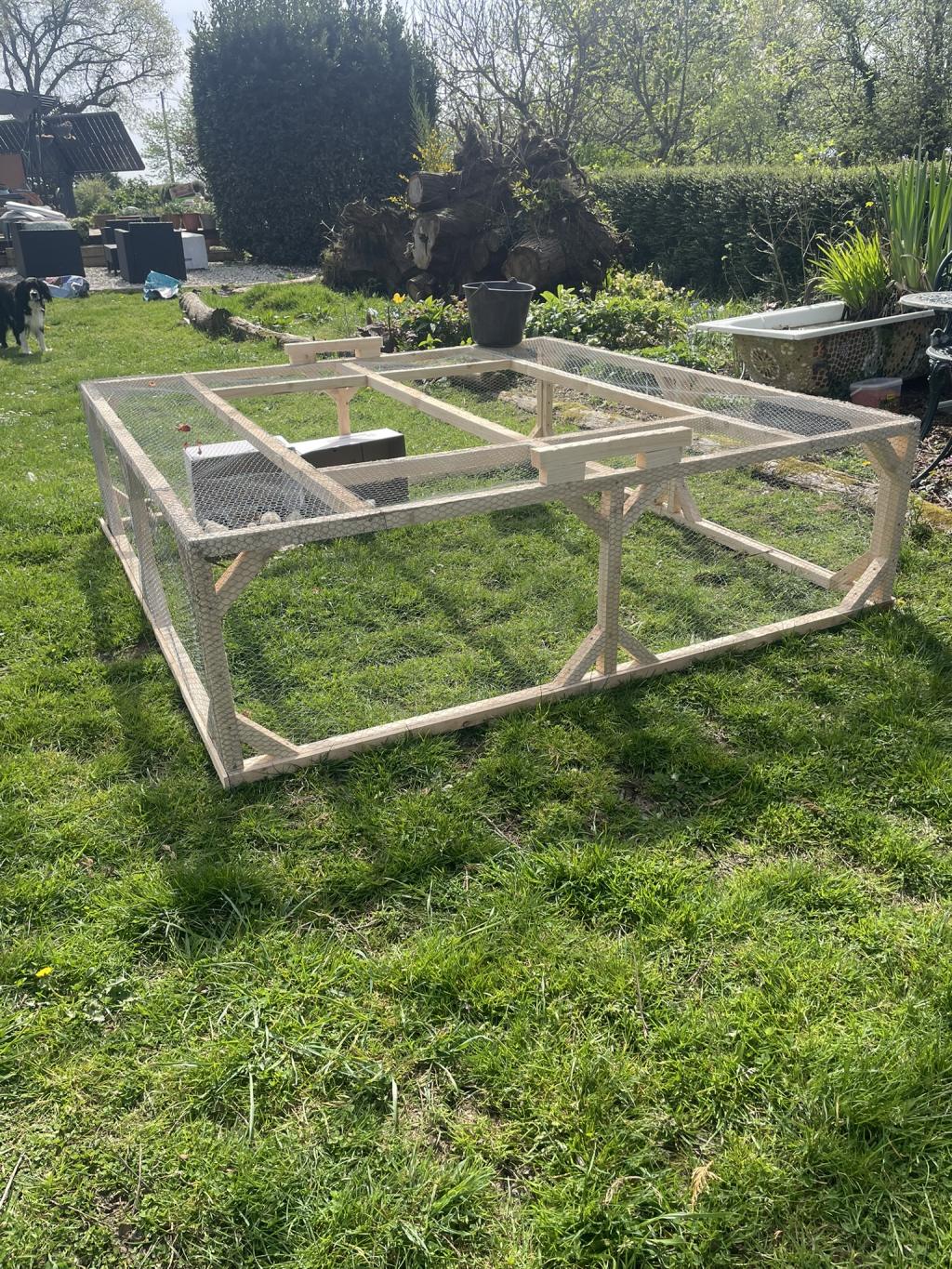
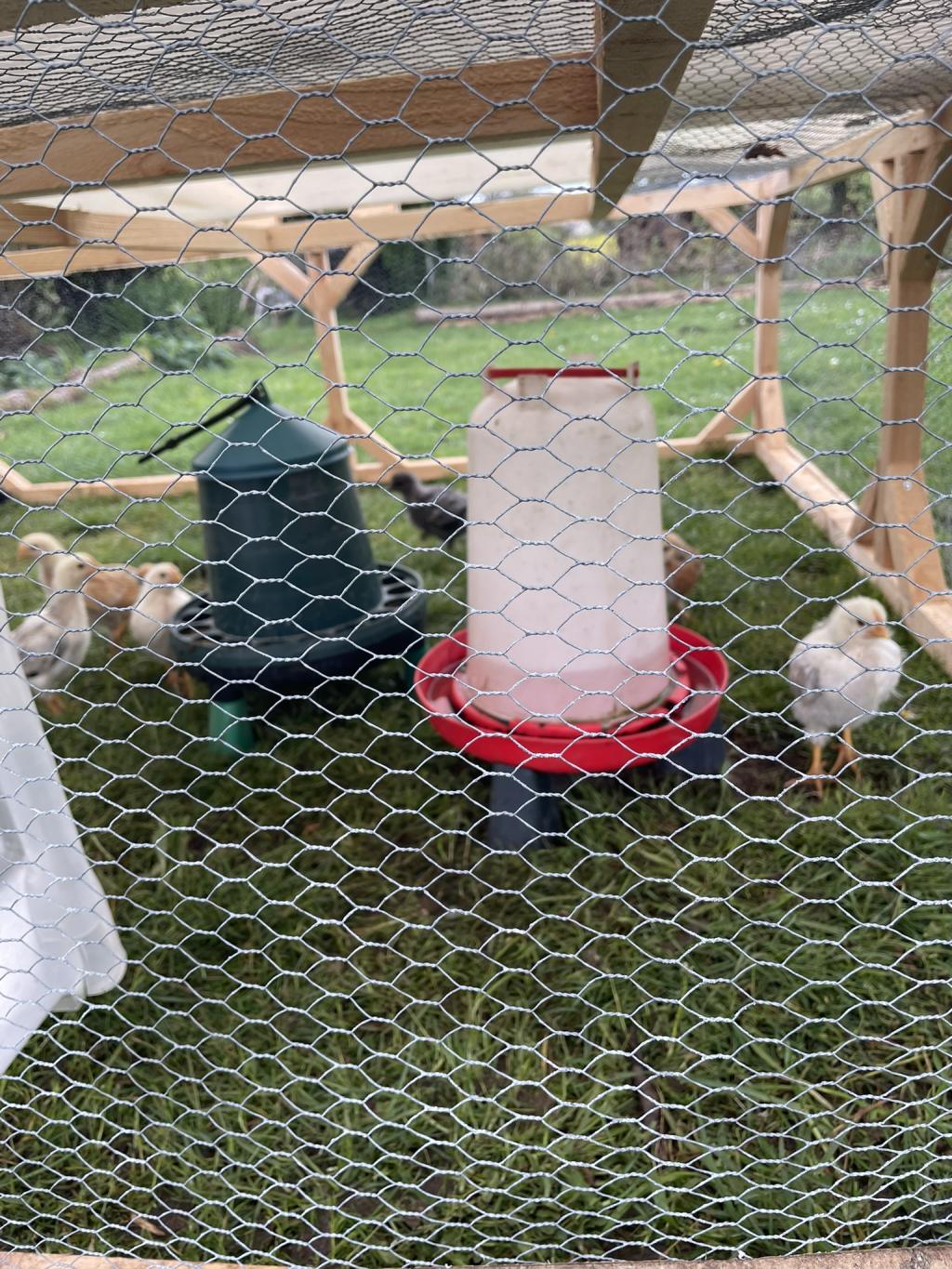
We had an outdoor pen from previous years, but it had been flattened by a falling tree over the winter. Glen set to work using timber he had milled himself from trees in our own forest, along with a roll of spare wire netting we already had on hand. The only purchase needed was a bag of screws. The result is a spacious, sturdy pen, large enough for 15 growing youngsters and secure enough to keep the foxes out.
Learning to come home
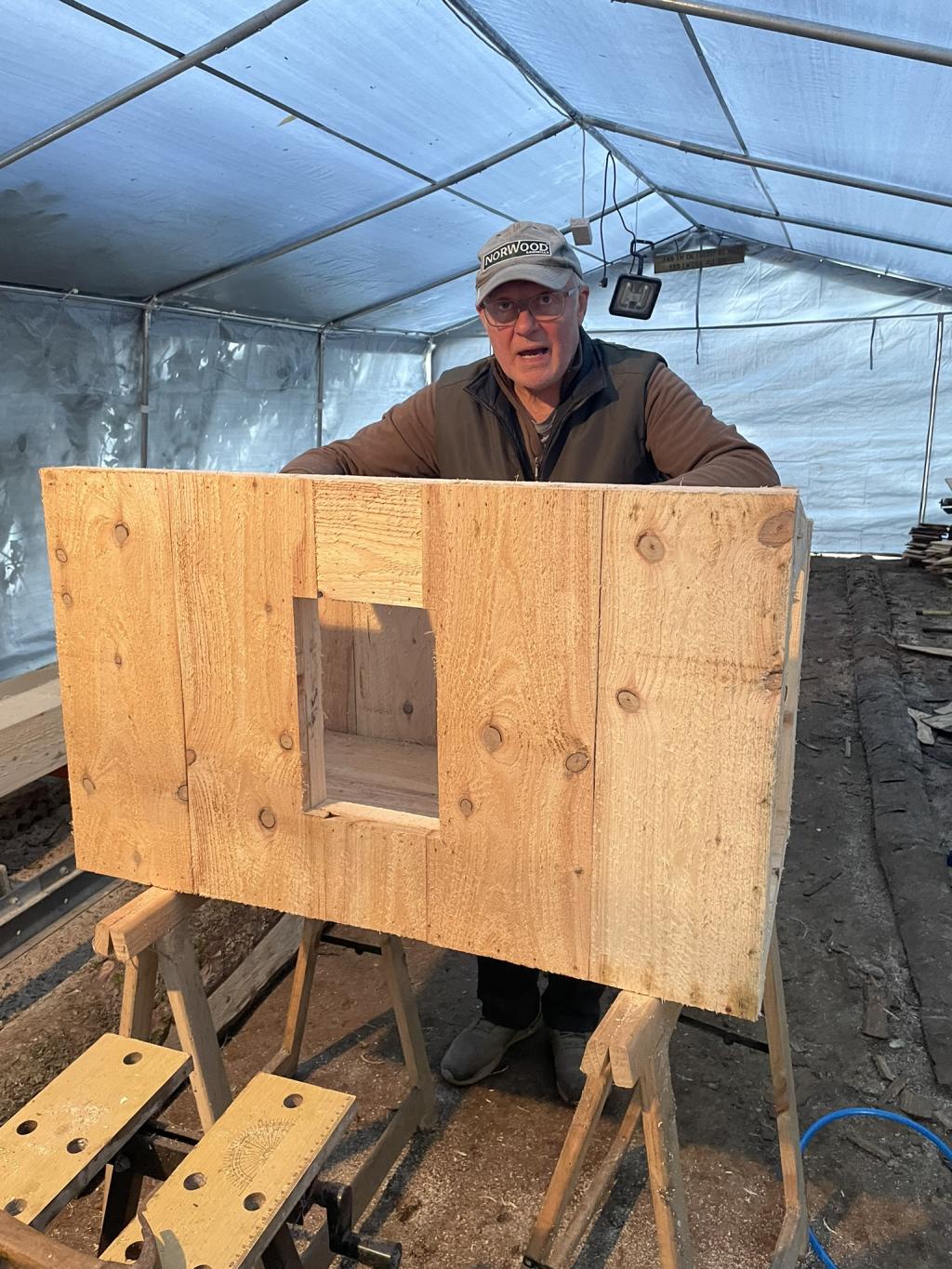
The pen was a success from the start, but for the first few days we were still catching the chicks by hand each evening and carrying them inside for the night. Glen then built them a small wooden sleeping house — simple, solid, and perfectly sized — and after just two evenings of guiding them in by hand, they worked it out for themselves. Now, as the light fades, they file into their little house without any prompting at all. There is something really satisfying about seeing that happen.
The plan: layers, cockerels, and the circle of life
The chicks will stay in their moveable pen — which we shift every few days to give them fresh ground (chicken tractor scenario) — until they are old enough and robust enough to join our free-range flock on the field. The females will integrate with our laying girls and become part of the permanent flock. The cockerels, once they reach a good size, will go into the freezer and eventually onto the table as proper, free-range roast chicken dinners.
It is one of the most honest and grounding aspects of smallholding life — raising animals well, giving them a good life, and I have to say here - it is NEVER easy to take them to slaughter. But as long as we choose to eat meat we believe you need to go through the full process. Nothing wasted, nothing taken for granted.
If you are curious about smallholding life, permaculture in practice, join our upcoming Open Days and Site Tours here in rural Brittany, we would love to welcome you to Afrinoon Permaculture. Come and see it all for yourself.